

Dual Plane Facelift Surgery in Mobile, AL
Jump To
Lift sagging tissue and achieve a naturally refreshed appearance with dual plane facelift surgery by Dr. Randy Proffitt.
 A facelift addresses sagging skin and underlying tissue laxity in the face and neck. Dr. Randy Proffitt performs facelift surgery in Mobile, AL, for patients with concerns including jowls, sagging cheeks, loss of jawline definition, and loose skin in the neck.
Dr. Proffitt offers a dual plane facelift technique that addresses the SMAS layer of the face and the platysma muscle of the neck. When appropriate, he can also use the Giampapa suture technique to improve definition along the neckline.
In recent years, there has been a lot of press about “mini facelifts” and facial rejuvenation without “downtime,” but there is no substitute for a facelift to tighten loose skin of the face and neck. Dr. Proffitt often states that with “mini” procedures, you get “mini” results.
How Does a Facelift Work?
A facelift involves repositioning facial tissues and removing excess skin. The specific technique depends on the patient’s anatomy and the extent of facial and neck laxity. Dr. Proffitt performs a dual plane facelift that addresses both the SMAS in the face and the platysma muscle in the neck. Treating these deeper tissues allows the surgical plan to address more than just excess skin.
The Dual Plane Facelift Technique
The SMAS is a layer of connective tissue and muscle beneath the skin of the face. The platysma is a broad muscle that extends through the lower face and neck. Age-related laxity in these structures can contribute to jowls, lower-face sagging, and neck laxity.
The dual plane technique addresses these structures as part of the facelift procedure. When appropriate, Dr. Proffitt may use the Giampapa suture technique to help improve definition along the neckline. The surgical approach is determined based on the patient’s anatomy, degree of laxity, and goals.
Who Is a Candidate for a Facelift?
A dual plane facelift may be appropriate for patients with laxity affecting both the face and neck, particularly when aging involves the SMAS and platysma muscle in addition to excess skin. The technique may be considered when repositioning these deeper tissues is needed as part of the surgical plan.
During a consultation, Dr. Proffitt evaluates the patient’s facial and neck anatomy, degree of tissue laxity, overall health, and goals to determine whether a dual plane facelift is appropriate.
Benefits of a Dual Plane Facelift
A dual plane facelift addresses the deeper tissues beneath the skin as well as excess skin. Depending on your anatomy and surgical plan, potential benefits include:
- Addresses more than loose skin: The technique also treats the SMAS in the face and the platysma muscle in the neck, which can contribute to sagging and loss of definition.
- Treats the lower face and neck together: Addressing these tissues above and below the jawline can help improve jowls, jawline definition, and neck laxity as part of the same procedure.
- Reduces reliance on pulling the skin: By repositioning deeper tissues, the procedure does not rely solely on tightening the skin to improve facial contours.
- May improve neckline definition: When appropriate, Dr. Proffitt may use the Giampapa suture technique to improve definition along the neckline.
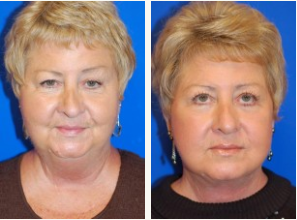
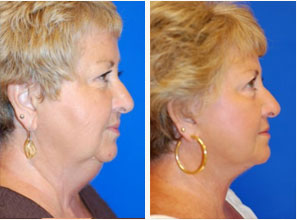
View more plastic surgery photos
How Is Facelift Surgery Performed?
Dr. Proffitt performs facelifts in an outpatient facility using general anesthesia administered under the supervision of a board-certified anesthesiologist. Incisions are typically placed around the ear and may extend into the hairline or behind the ear, depending on the surgical plan. An incision beneath the chin may also be used when necessary to address the neck.
Dr. Proffitt repositions the deeper facial and neck tissues as indicated, including the SMAS and platysma. The skin is then redraped, excess skin is removed, and the incisions are closed. Facelift surgery typically takes approximately three to four hours, depending on the surgical plan and any procedures performed at the same time.
Dual Plane Facelift Recovery
A bulky dressing is typically applied after surgery and changed at the first postoperative appointment, usually the following day. Most patients should plan to take at least one to two weeks off work. Bruising may take approximately three weeks to resolve. Strenuous activity should be avoided for six weeks, although walking is permitted during recovery according to postoperative instructions.
Swelling and tightness gradually improve as healing progresses. Results become more apparent as swelling resolves, with final results generally assessed over the following months.
Facelift Cost in Mobile, AL
The cost of dual plane facelift surgery depends on the surgical technique, extent of correction, anesthesia, facility fees, and whether additional cosmetic procedures are performed. Dr. Proffitt provides a personalized quote after evaluating the patient’s anatomy and discussing the recommended surgical plan.
Why Choose Dr. Proffitt
With more than 30 years of surgical experience, Dr. Randy Proffitt brings extensive experience to facelift surgery in Mobile, AL. His dual plane facelift technique addresses the SMAS in the face and the platysma muscle in the neck, allowing him to address deeper tissue laxity affecting the lower face, jawline, and neck in addition to excess skin.
When appropriate, Dr. Proffitt may also use the Giampapa technique to improve definition along the neckline. The surgical approach is based on each patient’s anatomy, the location and degree of laxity, and the patient’s goals. Patients in Mobile and throughout the Gulf Coast region can discuss their concerns and surgical options with Dr. Proffitt during a consultation to determine whether a dual plane facelift is appropriate.